
Flooring Types

How Do I Choose the Right Flooring for a Business Space in Northern Virginia?

Choose commercial flooring zone by zone instead of one product everywhere: carpet tile and LVT for offices, sheet vinyl for medical suites, rubber for gyms, and slip-resistant tile for kitchens. Covers traffic, ADA and OSHA rules, moisture, maintenance, noise and Virginia code.

Published November 21, 2026 by Floors and Beyond VA

How Do I Choose the Right Flooring for a Business Space in Northern Virginia?

Choose business flooring zone by zone, based on traffic, spills, slip resistance, noise and how much downtime you can afford for maintenance, not on looks alone. In most Northern Virginia offices, that means carpet tile in work areas and LVT in reception, corridors and break rooms. Medical suites usually need sheet vinyl or rubber, and gyms need rubber or sport flooring. Floors and Beyond VA, a licensed Virginia flooring contractor since 1987, helps businesses across Tysons, Reston, Fairfax and Arlington pick and install the right floor for each area.

Which flooring works best for each type of business space?

SpaceGood optionsWhy
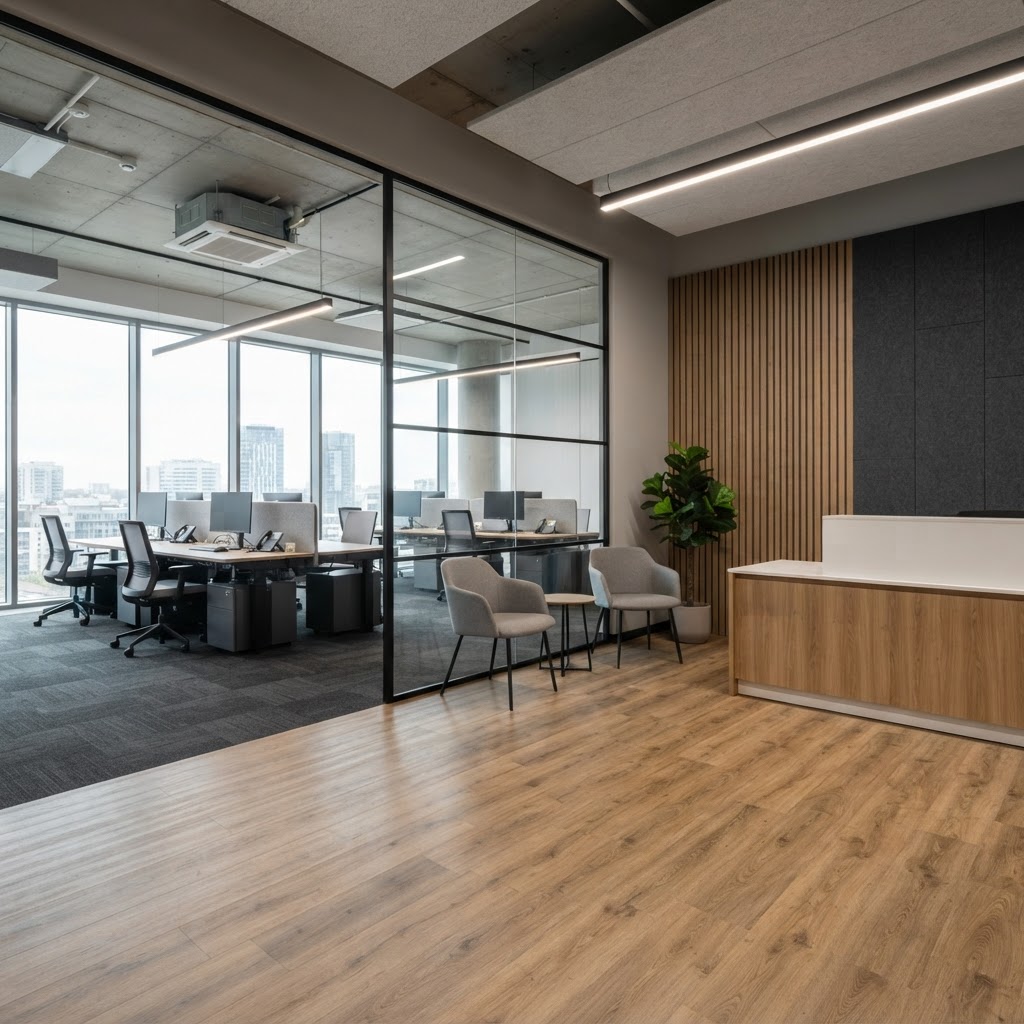
Offices and conference roomsCarpet tile, LVT, engineered woodQuiet, comfortable, replaceable tiles
Reception and lobbiesPorcelain tile, premium LVT, stoneDurable, first impression, easy to clean
Retail and showroomsLVT, porcelain tile, sealed concreteHeavy foot traffic, fixtures, carts
Restaurants and cafésTextured porcelain or quarry tile in kitchens, LVT in diningGrease and water need slip-resistant, nonporous surfaces
Medical and dental officesSheet vinyl with welded seams, rubber, commercial LVTSeams that don't trap liquids, easy disinfection
Gyms and fitness studiosRubber tiles or rolls, sport vinylImpact absorption, protects the slab, quieter
Schools and childcareVCT, sheet vinyl, LVT, carpet tile in quiet roomsDurable, cleanable, budget-friendly
Multifamily common areasLVT, carpet tile in hallwaysMoving-day traffic, noise between floors

Using different materials by zone almost always performs better than one product throughout the building.

How much traffic will the floor take?

Count daily visitors and staff, then think about rolling loads: office chairs, carts, hand trucks, hospital beds. For heavy traffic, pick modular materials you can replace a piece at a time, like carpet tile or LVT, or very hard surfaces like porcelain tile. A floor you can't close for repairs needs to be repairable in small sections.

What are the slip-resistance and accessibility rules for commercial floors?

The 2010 ADA Standards for Accessible Design require floor surfaces along accessible routes to be firm, stable and slip resistant. Carpet must be securely attached with a firm pad, or no pad, and a level-loop or low-pile texture. OSHA's walking-working surfaces rule (29 CFR 1910.22) requires workplace floors to be kept clean, orderly and, where feasible, dry.

In practice, pay closest attention to entrances (Northern Virginia winters bring in snow, slush and road salt), restrooms, kitchens and the transitions between two flooring types. Ask for the manufacturer's tested slip-resistance data, and use entrance matting at every exterior door.

How do moisture and spills affect the choice?

Keep solid hardwood and standard carpet out of areas with frequent water. Use sheet vinyl, porcelain tile, rubber or LVT where spills happen. Just as important is moisture coming up from below: many Northern Virginia commercial buildings sit on concrete slabs, and a slab with high moisture can cause glue-down LVT, carpet tile and wood to fail no matter how good the product is.

Why does the subfloor matter so much?

Most commercial flooring failures start with the substrate, not the material. Before you commit to a product, have your installer check:

  • Slab moisture and alkalinity
  • Flatness, cracks and old patching
  • Old adhesive or coatings that must be removed
  • Floor heights where the new floor meets existing surfaces

Manufacturer warranties usually require this testing and approved adhesives. Floors and Beyond VA tests the subfloor during the site walkthrough, before recommending a product.

How much maintenance and downtime can the business handle?

Ask whether your cleaning crew can maintain the floor with the equipment it already has, whether the floor needs waxing or periodic refinishing, and whether damaged sections can be swapped out. VCT, for example, is affordable to install but needs regular stripping and waxing. LVT and carpet tile need far less. A floor that's cheaper to install can cost more over its life if it forces you to close for maintenance.

What about noise and comfort?

Hard floors make open offices louder. Carpet tile absorbs footfall noise in work areas, and acoustic underlayment under LVT helps in upper-floor suites. Where staff stand for long shifts, at reception desks, retail counters or treatment rooms, rubber or cushioned resilient flooring is easier on their bodies.

Does indoor air quality matter for commercial flooring?

Yes, especially for schools, medical offices and newly renovated workplaces. Look for products and adhesives with low-emission certifications such as FloorScore, GREENGUARD Gold, or CRI Green Label Plus for carpet.

What rules apply to commercial flooring in Virginia?

Commercial work in Virginia falls under the Virginia Uniform Statewide Building Code, which includes fire-performance requirements for floor finishes in corridors and exits. Most Northern Virginia office leases also require landlord approval of materials and installers, and many buildings set rules on work hours and insurance. Check your lease before choosing a product.

How do I compare flooring options side by side?

Score each option from 1 to 5 on durability, slip resistance, water resistance, maintenance, acoustics, appearance, installation disruption, repairability, air quality and installed cost. Weight the factors by what matters most for your business: a restaurant weights slip resistance and cleanability, a law office weights acoustics and appearance, a gym weights impact absorption.

Can Floors and Beyond VA help my business choose and install flooring?

Yes. Floors and Beyond VA installs commercial carpet tile, broadloom, LVT, VCT, sheet vinyl, rubber and gym flooring, and hardwood for offices, retail, medical practices, fitness centers, schools and multifamily buildings across Northern Virginia and Washington, DC. Our in-house crews do every installation, and we test the subfloor before we recommend a product. To get a recommendation and bid for your space, contact us at floorsandbeyondva.com/Contact.

Book a commercial site walkthrough.

The surfaces we install are listed on our commercial flooring page. When you are ready for pricing, see how to hire a commercial flooring company and get office flooring quotes in Northern Virginia.

Related questions

Which flooring works best for each type of business space?
Offices and conference rooms: carpet tile, LVT or engineered wood for quiet, comfortable, replaceable surfaces. Reception and lobbies: porcelain tile, premium LVT or stone. Retail and showrooms: LVT, porcelain tile or sealed concrete for heavy traffic and fixtures. Restaurants: textured porcelain or quarry tile in kitchens and LVT in dining. Medical and dental offices: sheet vinyl with welded seams, rubber or commercial LVT. Gyms: rubber tiles or rolls and sport vinyl. Schools and childcare: VCT, sheet vinyl, LVT and carpet tile in quiet rooms. Multifamily common areas: LVT and carpet tile in hallways.
How much traffic will the floor take?
Count daily visitors and staff, then think about rolling loads: office chairs, carts, hand trucks, hospital beds. For heavy traffic, pick modular materials you can replace a piece at a time, like carpet tile or LVT, or very hard surfaces like porcelain tile. A floor you can't close for repairs needs to be repairable in small sections.
What are the slip-resistance and accessibility rules for commercial floors?
The 2010 ADA Standards for Accessible Design require floor surfaces along accessible routes to be firm, stable and slip resistant, and carpet must be securely attached with a firm pad, or no pad, and a level-loop or low-pile texture. OSHA's walking-working surfaces rule (29 CFR 1910.22) requires workplace floors to be kept clean, orderly and, where feasible, dry. Pay closest attention to entrances, restrooms, kitchens and transitions between flooring types.
How do moisture and spills affect the choice?
Keep solid hardwood and standard carpet out of areas with frequent water, and use sheet vinyl, porcelain tile, rubber or LVT where spills happen. Moisture coming up from below matters too: many Northern Virginia commercial buildings sit on concrete slabs, and a slab with high moisture can cause glue-down LVT, carpet tile and wood to fail no matter how good the product is.
Why does the subfloor matter so much?
Most commercial flooring failures start with the substrate, not the material. Before committing to a product, have your installer check slab moisture and alkalinity, flatness, cracks and old patching, old adhesive or coatings that must be removed, and floor heights where the new floor meets existing surfaces. Manufacturer warranties usually require this testing and approved adhesives.
How much maintenance and downtime can the business handle?
Ask whether your cleaning crew can maintain the floor with the equipment it already has, whether the floor needs waxing or periodic refinishing, and whether damaged sections can be swapped out. VCT is affordable to install but needs regular stripping and waxing, while LVT and carpet tile need far less. A floor that's cheaper to install can cost more over its life if it forces you to close for maintenance.
What about noise and comfort?
Hard floors make open offices louder. Carpet tile absorbs footfall noise in work areas, and acoustic underlayment under LVT helps in upper-floor suites. Where staff stand for long shifts, at reception desks, retail counters or treatment rooms, rubber or cushioned resilient flooring is easier on their bodies.
Does indoor air quality matter for commercial flooring?
Yes, especially for schools, medical offices and newly renovated workplaces. Look for products and adhesives with low-emission certifications such as FloorScore, GREENGUARD Gold, or CRI Green Label Plus for carpet.
What rules apply to commercial flooring in Virginia?
Commercial work in Virginia falls under the Virginia Uniform Statewide Building Code, which includes fire-performance requirements for floor finishes in corridors and exits. Most Northern Virginia office leases also require landlord approval of materials and installers, and many buildings set rules on work hours and insurance. Check your lease before choosing a product.
How do I compare flooring options side by side?
Score each option from 1 to 5 on durability, slip resistance, water resistance, maintenance, acoustics, appearance, installation disruption, repairability, air quality and installed cost, then weight the factors by what matters most for your business: a restaurant weights slip resistance and cleanability, a law office weights acoustics and appearance, a gym weights impact absorption.
Can Floors and Beyond VA help my business choose and install flooring?
Yes. Floors and Beyond VA installs commercial carpet tile, broadloom, LVT, VCT, sheet vinyl, rubber and gym flooring, and hardwood for offices, retail, medical practices, fitness centers, schools and multifamily buildings across Northern Virginia and Washington, DC. Our in-house crews do every installation, and we test the subfloor before we recommend a product.

This guide was written and published by Floors and Beyond VA — a flooring installation and restoration company serving Northern Virginia, including Fairfax County, Prince William County, Loudoun County, and Arlington County. For flooring questions or a free in-home estimate, call (703) 906-5698.

Free In-Home Consultation

Request Your Free Flooring Estimate

Tell us about your project and we will bring samples to your home, measure with a laser at no charge and walk you through a clear, all-inclusive estimate.

Or Call (703) 906-5698 Or Call (703) 906-5698

Ready to get started?

Get a free in-home flooring estimate in Northern Virginia.

Free Estimate Free Estimate

We Bring the Showroom to You

Shop-At-HomeConvenience

Don't drive all over town. We bring the flooring showroom to you. Book your free in-home consultation today — residential or commercial.

Floors and Beyond VA makes getting new floors easy.

Why Shop at Home

See Your FlooringIn Your Home

Close-up of interlocking black rubber gym flooring tiles in a home gym

The best way to choose flooring is in your own home where you can see exactly how it looks with:

  • Your natural and artificial lighting
  • Your furniture and décor
  • Your cabinets and paint colors

No need to visit crowded showrooms. No pressure from big box stores. Just personalized help from a flooring expert who listens to your needs and recommends options that fit your budget and design goals.

Contact Us
Flooring samples and sample books laid out in a bright living room during an in-home consultation

Our Process

Three Simple Stepsto New Floors

Free consultations, measurements, and pricing—with no surprises.

  1. Step 1

    Free, Personalized Consultation

    Choosing flooring can feel overwhelming. We listen to your needs, help you select the right flooring for your home and budget, and bring samples directly to you—with no pressure.

  2. Step 2

    Free, Expert Measurements

    Our professionals use precise laser measurements on every room—at no charge. We account for closets, transitions, thresholds, and moldings to ensure accuracy and eliminate surprises.

  3. Step 3

    Free, All-Inclusive Pricing

    One price. No hidden fees. Everything included: furniture moving, old flooring removal, new materials, professional installation, transitions, molding, and full cleanup.

Transparent pricing. Expert installation. Local professionals you can trust.

Get a Free EstimateGet a Free Estimate