
Home Gym Storage · Northern Virginia
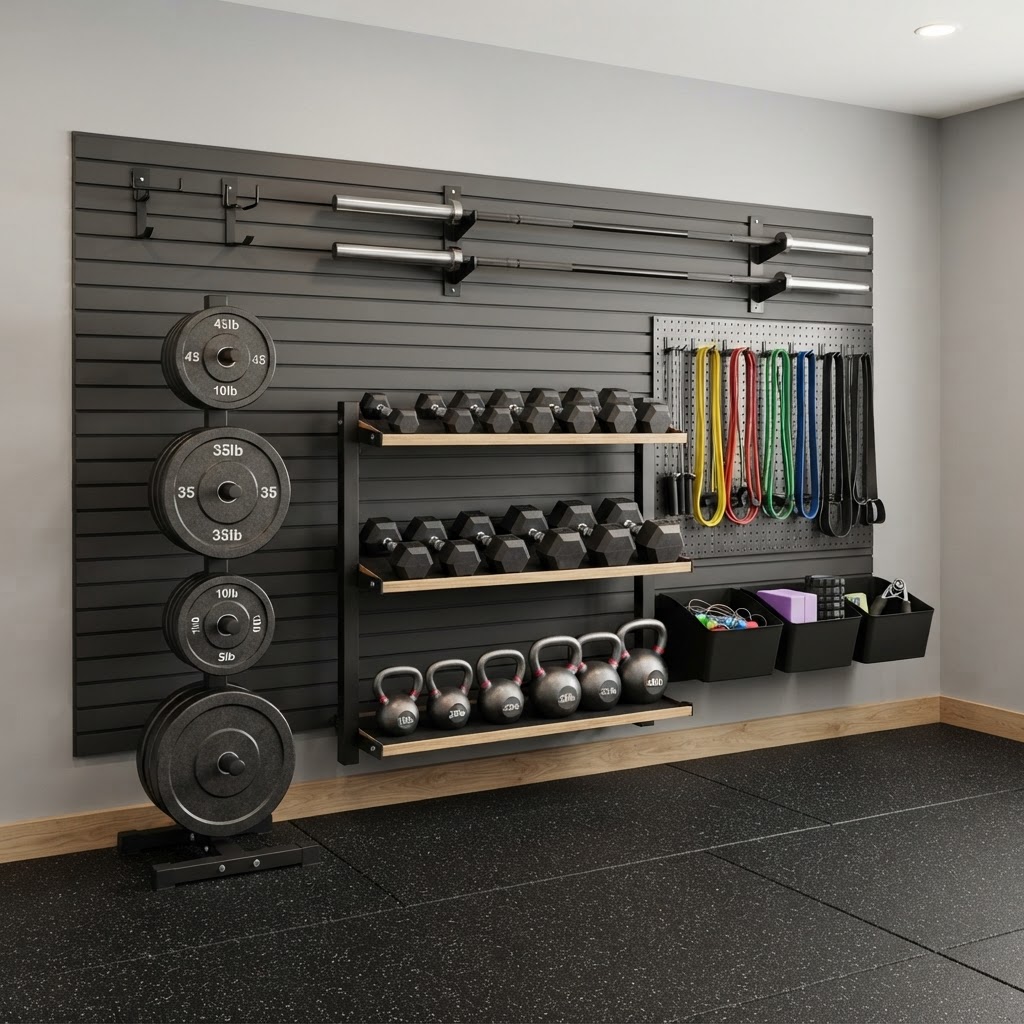
The best way to organize a home gym is to give every category of equipment a dedicated, vertical, wall-mounted or rack-based home: plates on plate trees or wall pegs, dumbbells and kettlebells on tiered racks near the zone where they are used, barbells on horizontal or vertical holders, bands and small accessories in labeled bins or hooks, and mats, foam rollers, and cardio accessories on shelves or wall hooks. Storing vertically frees the floor, protects your flooring and equipment, and keeps the space safe. Floors and Beyond VA, a family-owned Northern Virginia flooring and remodeling contractor serving Fairfax, Loudoun, Prince William, and Arlington counties since 1987, designs gym storage together with the flooring and layout, because where equipment lives affects where the floor takes the most wear.
A well-organized home gym is a gym you actually use. A disorganized one becomes a pile of metal you trip over. Many homeowners in Northern Virginia invest in good equipment, only to find the space cluttered within months. Plates are stacked on the floor, dumbbells are scattered, bands are tangled, and the room feels smaller and less inviting every week.
Storage is not an afterthought. It is a core part of gym design. It protects flooring, reduces injury risk, extends equipment life, and makes workouts more efficient. This guide covers how to plan storage for every category of gear, how to choose wall systems and racks, how flooring and storage work together, how to handle small spaces and shared rooms, how to manage moisture and odor, and how to avoid the mistakes that make gyms unmanageable.
Why Storage Matters More Than People Think
Good storage does more than keep things tidy.
Safety. Loose plates, dumbbells, and cables are trip hazards. A dropped weight can injure feet or damage equipment and floors. Storing weights in secure, stable racks reduces risk.
Flooring protection. Heavy plates dragged across flooring scratch and gouge it. Dumbbells stored on the floor leave dents and marks. Proper racks protect your investment in flooring.
Equipment longevity. Bars left in damp corners can rust. Bands exposed to sunlight degrade. Proper storage extends equipment life.
Workout efficiency. When everything has a place, you spend less time searching and more time training.
Motivation. A clean, organized gym is more inviting. Clutter drains motivation.
Space efficiency. Vertical storage frees floor area for movement, which matters in small spaces.
Shared use. If your gym doubles as a garage, basement, or guest room, storage determines whether the space can switch roles easily.
Plan Before You Buy: The Storage Audit
Before purchasing racks and shelves, take stock of what you have and how you train.
Inventory your equipment. List barbells, plates, dumbbells, kettlebells, benches, bands, ropes, plyo boxes, medicine balls, yoga mats, foam rollers, gloves, belts, straps, cardio accessories, and anything else.
Measure everything. Measure the heaviest and bulkiest items, and note their weights.
Group by use. Which items are used together? Barbells and plates belong near the rack. Mats and rollers belong near the stretching area.
Think about frequency. Store daily-use gear at easy-reach heights and occasional gear in higher or lower spots.
Consider growth. Plan for equipment you may add.
Map your room. Sketch the gym with walls, doors, windows, outlets, vents, and obstacles. Note ceiling height and wall materials.
Identify the walls. Which walls can take mounted storage? Concrete block, studs, and drywall each require different anchoring.
Note moisture and temperature. Garages and basements have conditions that affect equipment.
This audit shapes your storage plan. During our free in-home consultation at Floors and Beyond VA, we can walk your space with you and help plan storage along with flooring and layout.
Weight Plate Storage
Plates are heavy, awkward, and damaging to floors if mishandled. Storing them well is a priority.
Plate Trees
A vertical plate tree holds plates on horizontal pegs. It is stable, saves floor space, and keeps plates accessible. Choose a model with a wide base, strong welds, and enough pegs for your collection. Place it on rubber flooring and near your lifting area.
Wall-Mounted Plate Pegs
Wall pegs mount directly to studs or concrete and hold plates against the wall, freeing floor space. They require solid anchoring and the right wall construction.
Rack-Integrated Storage
Many power racks include plate storage pegs on the uprights. This keeps plates next to where you use them.
Plate Trolleys and Carts
Carts help move heavy plates from storage to the lifting area, which reduces strain and protects floors.
Organizing Plates
Group plates by weight so you can find them quickly. Keep bumper plates and iron plates separate if you have both.
Floor Protection
Never stack plates directly on finished flooring. Use rubber tiles, platforms, or dedicated bases.
Dumbbell, Kettlebell, and Weight Storage
Tiered Dumbbell Racks
Tiered racks store dumbbells in order of weight. Horizontal racks are stable and accessible, while vertical racks save space. Choose one with proper support for your heaviest weights.
Saddle Racks
Saddle-style racks hold dumbbells on angled rails and are good for fixed-weight sets.
Adjustable Dumbbell Stands
If you use adjustable dumbbells, a stand keeps them off the floor and ready to use.
Kettlebell Racks and Shelves
Kettlebells are best stored on low shelves or racks designed for them. Keep them near the floor so you are not lifting them to high shelves.
Wall-Mounted Racks
Heavy-duty wall systems can hold dumbbells and kettlebells, but they require solid anchoring and a wall that can bear the load. Do not hang heavy weight on drywall without proper blocking or studs.
Medicine Balls and Slam Balls
Wall racks, baskets, or ball cradles keep these from rolling around.
Weight Vests and Sandbags
Hooks or shelves keep these off the floor and easy to reach.
Barbell Storage
Barbells are long, heavy, and sensitive to storage conditions.
Vertical Barbell Holders
Vertical storage keeps bars upright in a compact footprint. It is efficient for small spaces and is common in garages and compact rooms. Make sure the holder is stable and bars cannot tip.
Horizontal Wall Racks
Horizontal wall-mounted holders keep bars off the floor and visible. They can hold several bars at once and are good for specialty bars.
Rack-Integrated Storage
Many racks have built-in barbell storage.
Protecting Bars
Bars rust in humid conditions. Wipe them down, apply light oil as recommended by the manufacturer, and control humidity. A dehumidifier or climate control helps in Northern Virginia summers.
Specialty Bars
Safety squat bars, trap bars, and curl bars each need holders designed for their shapes.
Storing Small Accessories, Bands, and Cardio Gear
Small items cause the most clutter.
Resistance Bands
Hooks, pegs, or hanging organizers keep bands untangled and out of the sun. Group by resistance level.
Jump Ropes, Lifting Straps, and Belts
Wall hooks or hanging racks keep these accessible.
Gloves, Wraps, and Chalk
Small bins or shelves near the lifting area keep these within reach. A dedicated chalk bucket or tray prevents mess.
Foam Rollers, Massage Balls, and Mobility Tools
Baskets, shelves, or wall racks keep recovery tools organized in your stretching zone.
Yoga Mats and Exercise Mats
Rolled mats can be stored in wall racks, in tall baskets, or on shelves. Hang mats to keep them dry.
Plyo Boxes and Steps
Stack boxes in a corner or under benches. Wall-mounted racks can hold steps.
Cardio Accessories
Heart-rate monitors, headphones, and water bottles benefit from a small shelf or tray.
Cleaning Supplies
Keep wipes, spray, and towels in a dedicated spot near the equipment.
Labels and Zones
Label bins and shelves so everyone knows where things go. Color coding by category works well for shared gyms.
Wall Systems, Racks, and Built-Ins
Choosing the right structure matters.
Slatwall and Track Systems
Slatwall panels and rail systems let you hang hooks, shelves, and racks in flexible configurations. They are easy to reconfigure as your needs change.
Pegboard and Grid Panels
Pegboard is economical for small accessories, while heavier-duty grid panels can hold more weight.
Heavy-Duty Wall Mounts
For plates, dumbbells, and barbells, use mounts rated for the load and anchored to studs or concrete.
Custom Cabinets and Built-Ins
Custom cabinetry can hide clutter, hold gear, and make a gym feel like a finished room. Closed cabinets protect equipment from dust and moisture, while open shelving keeps frequently used items visible. Our carpentry team can build custom storage tailored to your space. See our gyms and fitness rooms page.
Freestanding Racks
Freestanding racks are flexible and can be moved, which helps in reversible or shared spaces.
Overhead Storage
Ceiling-mounted racks can hold seasonal items, but they must be anchored to structural framing and are not for heavy gear.
Under-Bench and Under-Platform Storage
Benches and platforms with built-in storage use otherwise wasted space.
Mirrors With Storage
Some mirrors incorporate shelves or cabinets.
Wall Construction
Know your walls. Concrete block, poured concrete, wood studs, and drywall each need different anchors. Blocking added during framing or remodeling provides solid mounting points anywhere you want them. If you are finishing or renovating the space, we can add blocking and backing so storage can be mounted anywhere.
Flooring and Storage: How They Work Together
Flooring and storage are connected in several ways, and as a company that began with floors, this is where we have the most to say.
Rubber Flooring Under Racks
Heavy racks, plate trees, and dumbbell stands concentrate weight in small areas. Rubber flooring distributes load, absorbs impact, and protects the surface beneath. See our rubber flooring and gym flooring pages for options.
Thickness and Impact Zones
Place thicker rubber in lifting zones where weights may be dropped, and thinner rubber or other surfaces in cardio and stretching zones.
Traffic Zones and Wear
Areas where you load and unload plates see heavy wear. Planning storage near the lifting area reduces how far you carry heavy items across the floor.
Protecting the Slab or Subfloor
In garages and basements, concrete slabs are durable but can crack under repeated impact if unprotected. In upper-level rooms, heavy equipment adds load to floor framing and should be placed thoughtfully. If you are placing a heavy rack or lots of plates on an upper floor, have the structure evaluated.
Leveling and Stability
Racks and storage units need a level surface to be stable. Uneven floors can cause tipping and uneven wear. Proper subfloor preparation matters.
Moisture and Mats
In damp basements and garages, rubber can trap moisture. Slab moisture testing and, where needed, a moisture barrier or mitigation system protect both flooring and stored gear.
Cleaning and Maintenance
Storage that lifts equipment off the floor makes cleaning easier. Smooth transitions and tight seams reduce places for dirt to hide.
Combining Flooring Types
Many gyms combine rubber lifting zones with vinyl, turf, or carpet tile elsewhere. Our vinyl and linoleum flooring, garage flooring, and outdoor and turf flooring pages show options. Our flooring services overview and floors by activity guide can help you match surfaces to training.
Storage Ideas by Space
Different gym locations have different challenges.
Garage Gyms
Garages offer space but also dust, humidity, and temperature swings. Use closed cabinets for sensitive gear, wall-mounted systems for heavy items, and dehumidification. Keep storage away from the garage door track. See our garage and car barn services and our garage flooring page.
Basement Gyms
Basements are usually cooler and more humid. Protect equipment with dehumidification and keep gear off the floor. See our basement finishing page.
Spare Bedroom or Bonus Room Gyms
These rooms often double as guest rooms or offices. Use closets, cabinets, and fold-away solutions. Choose storage that looks like furniture. Be mindful of floor loading on upper levels.
Small Apartments and Condos
Vertical storage, under-bed bins, wall hooks, and compact equipment help. Noise and floor protection matter in multi-family buildings. Our condominium remodeling team understands these constraints.
Shared Family Spaces
If your gym is part of a family room or play area, closed storage keeps equipment out of sight and safe from children. Our family room remodeling page shows how built-ins can hide gear.
Outdoor and Covered Spaces
Outdoor gyms need weatherproof storage and rust-resistant equipment. Our patios and decks page covers outdoor spaces.
Safety and Child-Proofing
If children or pets are in the house, gym storage deserves extra care.
Secure heavy items. Anchor racks and tall storage to walls to prevent tipping.
Lock or limit access. A lockable door or cabinet keeps children away from heavy equipment.
Store dangerous items high. Keep small, sharp, or breakable items out of reach.
Clear floors. Keep walkways free of cords, bands, and weights.
Use stable bases. Avoid storage that can tip when someone leans on it.
Think about cords. Keep cardio cords and charging cables organized.
Check weight ratings. Never exceed the rated capacity of shelves, hooks, or racks.
Moisture, Odor, and Cleanliness
Gyms generate sweat, humidity, and odor. Storage affects all three.
Ventilation. Keep air moving with fans and open shelving. Closed cabinets should have vents or breathable doors.
Dehumidification. In Northern Virginia's humid summers, a dehumidifier or climate control protects equipment, mats, and bars.
Towel and laundry storage. A hamper or hook for sweaty towels keeps the room fresh.
Wipe-down stations. Keep cleaning supplies near equipment.
Hanging mats. Hang mats to dry between sessions.
Rust prevention. Wipe down metal surfaces, and use oil or protectants as recommended.
Shoes. A shoe rack at the entrance keeps street dirt out and protects flooring.
Cleaning flooring. Regular sweeping and mopping with appropriate cleaners keeps flooring in good shape. Our floor care guide offers general tips.
What Drives the Cost of Gym Storage
We do not publish prices in blog content, because gym storage ranges from a few simple hooks to a full custom build. These factors shape the scope.
- Scale of storage. A few racks and hooks is very different from a wall of custom cabinetry.
- Custom versus off-the-shelf. Freestanding racks and slatwall are modular, while built-ins are tailored.
- Wall preparation. Blocking, reinforcement, and drywall repair add work.
- Materials. Plywood, steel, hardwood, and laminate vary widely.
- Finish level. Painted or stained cabinetry and trim cost more than raw materials.
- Electrical. Outlets, lighting, and charging stations add scope.
- Flooring coordination. New flooring under storage adds installation work.
- Climate control. Dehumidifiers and HVAC protect equipment but add cost.
- Installation complexity. Anchoring into concrete, studs, or masonry takes skill.
- Hidden conditions. Moisture or structural problems discovered during work.
An itemized proposal helps you understand exactly what you are paying for.
The Process: Designing Gym Storage With Floors and Beyond VA
If you are renovating or building a gym, the best time to plan storage is before finishing the room.
Design consultation. We visit your home, measure the space, review your equipment and training, and talk about how you want the room to function. Samples come to you.
Detailed proposal. You receive a clear scope of work with transparent pricing and no hidden costs.
Wall and floor preparation. We add blocking, repair walls, and prepare the floor.
Flooring installation. The flooring system is installed first, so storage can be placed on top.
Storage and built-ins. Racks, cabinets, shelves, and wall systems are installed and anchored.
Lighting, mirrors, and finishing touches. Final details complete the room.
Final walkthrough. We inspect every detail with you and complete a thorough cleanup.
Because Floors and Beyond VA uses in-house crews only, with no subcontractors, the same team handles flooring, carpentry, and finishes, so storage and floors fit together. Learn more about our home remodeling services and see finished work in our portfolio.
Common Mistakes to Avoid
- Storing weights on the floor. This damages flooring and creates trip hazards.
- Using weak wall mounts. Heavy items need studs, blocking, or concrete anchors.
- Ignoring humidity. Rust and mold can ruin equipment.
- Buying storage before measuring. Check dimensions and clearances first.
- Overloading shelves and racks. Respect weight ratings.
- Placing storage far from use. Store gear near where you use it.
- Forgetting to anchor tall units. Tipping is dangerous.
- No plan for small items. Bands and accessories create clutter fast.
- Skipping flooring protection. Racks and plates need rubber underneath.
- Not planning for growth. Equipment collections tend to grow.
- Blocking circulation. Keep clear paths and safe clearance around equipment.
- Neglecting lighting. Poor lighting makes storage hard to use.
- Choosing looks over function. Storage must work first.
We will look at your space, talk through your equipment and training, bring samples, and give you a clear, honest proposal. Serving Fairfax, Loudoun, Prince William, and Arlington counties, including Ashburn, Leesburg, Reston, Manassas, Woodbridge, Sterling, and Arlington.
Frequently Asked Questions About Home Gym Storage
What is the best way to store weight plates? Plate trees and wall-mounted pegs are the most common solutions. They keep plates off the floor and accessible, and they protect flooring.
How do I store dumbbells in a small space? Vertical or tiered racks, adjustable dumbbells on a stand, or wall-mounted systems save space. Place them near where you use them.
How do I keep barbells from rusting? Control humidity, wipe bars after use, and apply light oil as recommended by the manufacturer. A dehumidifier helps in humid Northern Virginia summers.
Can I mount heavy storage on drywall? Not without proper backing. Use studs, added blocking, or concrete anchors rated for the load.
How do I protect my floor from heavy racks? Use rubber flooring or mats under racks and storage. Thicker rubber in lifting zones protects against dropped weights.
How do I store a gym in a shared room? Closed cabinets, fold-away racks, and furniture-style storage let a gym blend with another room.
How much storage do I need? Inventory your equipment and plan for growth. Include space for plates, dumbbells, bars, accessories, and cleaning supplies.
Can you build custom gym storage? Yes. Our in-house carpentry team can build custom cabinets, shelves, and built-ins coordinated with flooring and layout.
Ready to Organize Your Home Gym?
A gym that is organized, safe, and easy to use is a gym you will keep using. Floors and Beyond VA brings nearly forty years of Northern Virginia experience, in-house crews with no subcontractors, and a flooring-first approach to every gym project.
Request Your Free Consultation
You can also call (703) 906-5698 or email hello@floorsandbeyondva.com.




