
Commercial Flooring Guide · Floors and Beyond
If you're asking what is the best flooring for a commercial office space in Northern Virginia, the answer depends on far more than showroom looks and day-one price per square foot. Many office managers prioritize those two factors, then deal with peeling seams, acoustic complaints, or a cleaning bill that nobody budgeted for three years later.
Northern Virginia adds its own layer of complexity. The region's hot, humid summers and dry, heated winters stress floors in ways that generic spec guides never account for, and a concrete slab-on-grade install in Fairfax behaves very differently from the same job in a climate-controlled high-rise in Rosslyn.
The four flooring types that come up most often in commercial office work here are commercial LVT (luxury vinyl tile), carpet tile, polished concrete, and engineered hardwood. Each has a legitimate place in Northern Virginia offices, and each has real limitations that a product brochure won't tell you. At Floors and Beyond, our experienced in-house team has years of hands-on experience installing and specifying commercial flooring across Fairfax, Arlington, Loudoun, and Prince William counties, so the perspective in this guide comes from field experience, not a manufacturer's marketing sheet. By the time you finish reading, you'll know which floor fits your traffic pattern, your acoustic needs, and your budget over the long haul.
A note from the Floors and Beyond crew
Specifying floors for an office suite? Our in-house team will walk your space, test slab conditions, and hand you an all-inclusive estimate on the spot — free, at your office, anywhere in Fairfax, Arlington, Loudoun, or Prince William counties.
Book a Free On-Site Consultation Explore Commercial FlooringWhy the DC metro climate should shape your flooring decision
How humidity and dry winters stress commercial floors
Northern Virginia sits in a climate zone that swings hard in both directions. Summers bring sustained heat and humidity that can push indoor relative humidity well above 60 percent, while winters with forced-air heat can drop that same indoor air to 20–30 percent humidity. That seasonal swing creates repeated expansion and contraction in any floor material that isn't dimensionally stable. Solid hardwood is the most vulnerable, but even some LVP and laminate products will gap, buckle, or lift adhesion bonds if they aren't properly specified for the conditions.
The bigger issue for commercial offices is slab-on-grade moisture. Many office buildings in the DC metro area, particularly older garden-style offices and ground-level commercial suites, sit on concrete slabs that emit moisture vapor year-round. A floor that performs perfectly in a Phoenix office park can fail in well under two years on a Loudoun County slab if moisture vapor emission rates aren't tested and addressed before installation.
Moisture mitigation before any floor goes down
On any commercial concrete slab installation, moisture vapor testing before the floor goes down is standard professional practice, not an optional upgrade. The controlling threshold for most resilient and adhesive-bonded flooring systems is 3 lb per 1,000 sq ft per 24 hours as measured by the calcium chloride test method, though some commercial products allow higher limits depending on the adhesive system. When a slab exceeds the product manufacturer's limit, the right call is a topical moisture mitigation membrane or a two-part epoxy moisture-suppression system before anything else gets installed.
SPC-core LVT (solid polymer core) is the most moisture-tolerant flooring you can put on a slab because the core itself is waterproof. That's a meaningful spec advantage in Northern Virginia's environment. Wood-based products, including engineered hardwood, require careful moisture management on any slab install, and solid hardwood has no business going into a below-grade or slab-on-grade office environment without serious mitigation work that often isn't worth the cost.
What is the best flooring for a commercial office space in Northern Virginia: the four main options compared
Commercial LVT: durable, waterproof, and budget-flexible
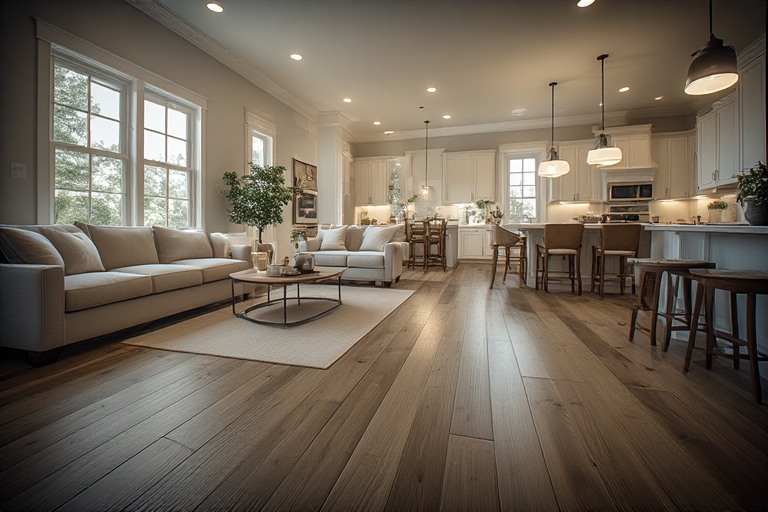
When evaluating what is the best flooring for a commercial office space in Northern Virginia, commercial LVT is the option that fits the widest range of environments. It's among the most commonly specified flooring types in Northern Virginia offices right now, and for good reason. For standard office traffic, a 20 mil wear layer is the minimum spec; open-plan offices with rolling chairs, high foot traffic, and heavy caster use should move to 28 mil. A properly specified commercial LVT installation carries a realistic lifespan of 15–20 years. Installed cost in the Northern Virginia market currently runs $4–$9 per square foot, with SPC-core products at the higher end of that range and worth the premium for slab installs. LVP office flooring, the plank-format version of the same product family, is worth specifying wherever a wood-look aesthetic is the goal without the moisture risk of engineered hardwood.
Carpet tile: the acoustic specialist for busy workspaces
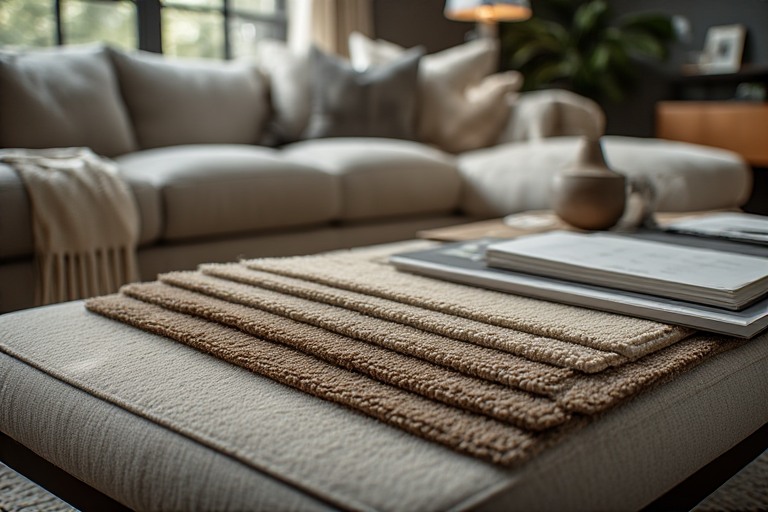
Commercial carpet tile remains the go-to choice for open-plan offices, call-heavy environments, and conference rooms, and the reason is acoustic performance. With a noise reduction coefficient (NRC) of roughly 0.15–0.35, carpet tile absorbs meaningful amounts of airborne sound, reducing reverberation and making a busy workspace significantly less fatiguing than the same space with a hard floor. The trade-off is straightforward: carpet tile has a shorter commercial replacement interval, typically 5–7 years in high-use environments, depending on traffic and maintenance, and needs regular vacuuming plus periodic hot-water extraction to maintain appearance and hygiene. Installed cost runs $5–$10 per square foot. The modular format is a real operational advantage: a damaged or stained tile gets swapped out individually rather than requiring a full floor tear-out.
Polished concrete: low-maintenance with an industrial edge
Polished concrete earns its place in creative agencies, co-working spaces, and modern reception areas where a clean, industrial aesthetic fits the brand. Day-to-day maintenance is among the lowest of any office flooring option — sweeping and occasional damp mopping is typically all that's needed. The significant drawback in office environments is acoustic: polished concrete has an NRC of essentially 0.00–0.05, meaning it reflects nearly all sound. A busy open-plan office on polished concrete without serious ceiling or wall acoustic treatment will be a loud, fatiguing workspace. Installed cost ranges from $4–$12 per square foot depending on slab condition, grinding steps, and finish level.
Hardwood veneers: prestige aesthetics with real limitations
Engineered hardwood has a legitimate role in executive offices and private conference rooms where first impressions carry weight. It's refinishable once or twice in its commercial lifespan and delivers a warmth that no hard-surface alternative fully replicates. That said, it's not the right call for high-traffic corridors, breakrooms, or any slab-on-grade install without verified moisture conditions. Over a 20-year total cost of ownership horizon, engineered hardwood's refinishing costs and replacement cycle can make it more expensive than commercial LVT installed in the same footprint — depending on product selection, refinishing schedule, and replacement assumptions, run the numbers for your specific project before committing.
Acoustics, slip resistance, and maintenance: the honest comparison
Which floor controls noise and which makes your office louder
The acoustic hierarchy is clear: carpet tile absorbs the most sound. Commercial LVT sits in the middle, and it's worth noting that plain LVT without acoustic backing has an NRC close to hard surfaces; it moves to meaningful mid-range performance only when paired with a specified acoustic-backed underlayment. Polished concrete is the worst option for reverberation by a wide margin.
For practical zone planning, carpet tile belongs in open workspaces and any room where speech privacy matters. LVT or polished concrete works well in corridors and reception areas, but those spaces need acoustic support elsewhere in the room — ceiling panels, wall baffles, or soft furnishings — to keep reverberation from bleeding into adjacent work areas.
For slip resistance, both commercial-grade textured LVT and matte-sealed concrete perform reliably in entry zones and high-traffic corridors, especially in dry conditions. Carpet tile generally provides good traction but isn't the practical choice where wet-surface slip risk is the primary concern, such as near building entries during winter or next to breakroom sinks.
Cleaning schedules and long-term maintenance reality
LVT keeps maintenance straightforward: daily sweeping and occasional damp mopping handle most of it. Polished concrete is even simpler to keep clean and is the best choice when minimizing janitorial labor cost is a priority. Carpet tile requires regular vacuuming and scheduled hot-water extraction, which adds cost but comes with the acoustic and comfort benefits already described.
One floor worth flagging specifically is VCT (vinyl composition tile). It's cheap to install, which is why it still shows up in commercial specs, but it requires recurring strip-and-wax cycles, typically a full strip every 12–18 months and a scrub-and-recoat every few months. Those recurring labor and material costs accumulate significantly over a building's lease term, making VCT one of the most expensive floors to own over time despite its low install price. Fold that cost into your budget before you spec it, and most experienced installers will tell you to avoid it.
What office flooring actually costs in Northern Virginia in 2026
Installed cost ranges for Fairfax, Arlington, and Alexandria
Current installed cost benchmarks in the Northern Virginia market: commercial LVT runs $4–$9 per square foot, carpet tile runs $5–$10 per square foot, and polished concrete ranges from $4–$12 per square foot depending on slab prep and finish level. These ranges assume a reasonably clean slab with no significant remediation needs. Slab condition is the variable that moves numbers most: a floor quoted at $4 per square foot on a clean slab can easily land at $7 or more once moisture mitigation, crack repair, and leveling compound are factored in. Get the subfloor assessed before you lock in a budget.
Thinking in lifecycle cost, not just install price
The install price is only one part of the equation. Both carpet tile and commercial LVT typically require full replacement within 15 years, sometimes sooner in high-use environments, which means the 20-year budget includes at least one replacement cycle. Polished concrete, by contrast, has a realistic lifespan measured in decades with minimal recurring cost. Based on project data for a mid-size office suite, commercial LVT can run roughly $47,000 over 15 years versus polished concrete with sealant at approximately $36,000 for the same space, depending on product selection, maintenance costs, and replacement timing. Carpet tile at $5 per square foot replaced every seven years costs more over 20 years than LVT at $7 per square foot replaced once.
Spend more upfront on a floor that fits your environment and traffic pattern, and you'll almost always come out ahead on total cost over the building's lease term. The math consistently rewards the right spec over the cheapest install.
A note from the Floors and Beyond crew
Budget numbers only mean something once someone has actually looked at your slab. Our in-house team assesses slab condition, moisture risk, and leveling needs during every free on-site visit, and the estimate you get includes all of it — no surprises after work begins.
Get an All-Inclusive EstimateMatching the right floor to each area of your office
High-traffic zones: reception, corridors, and breakrooms
These areas need durability, easy cleaning, and a professional appearance that holds up under daily foot traffic. Commercial LVT with a 20–28 mil wear layer is the strongest all-around choice for corridors and reception areas. Polished concrete works well in spaces where the industrial-modern aesthetic fits the brand. Any area near water, including breakrooms and restroom-adjacent corridors, benefits from waterproof-core SPC construction. For entry zones that see wet shoes and tracked-in moisture during winter, a textured LVT finish or matte-sealed concrete with appropriate slip resistance is the right spec.
Workspaces and conference rooms: where acoustics take priority
Open-plan work areas and meeting rooms are where carpet tile earns its cost. Sound absorption reduces overall fatigue, improves speech privacy between workstations, and lowers reverberation without requiring expensive acoustic ceiling panels throughout the space. For private executive offices where a hardwood aesthetic fits the brand and moisture conditions have been verified, engineered hardwood is a defensible choice. Mixing surface types by zone is standard practice in well-designed commercial offices: carpet in the open workspace, LVT in the corridor, and a hard surface in reception creates both practical and visual differentiation without a complex installation.
How Floors and Beyond removes the guesswork for Northern Virginia offices
A free on-site consultation built around your floor plan
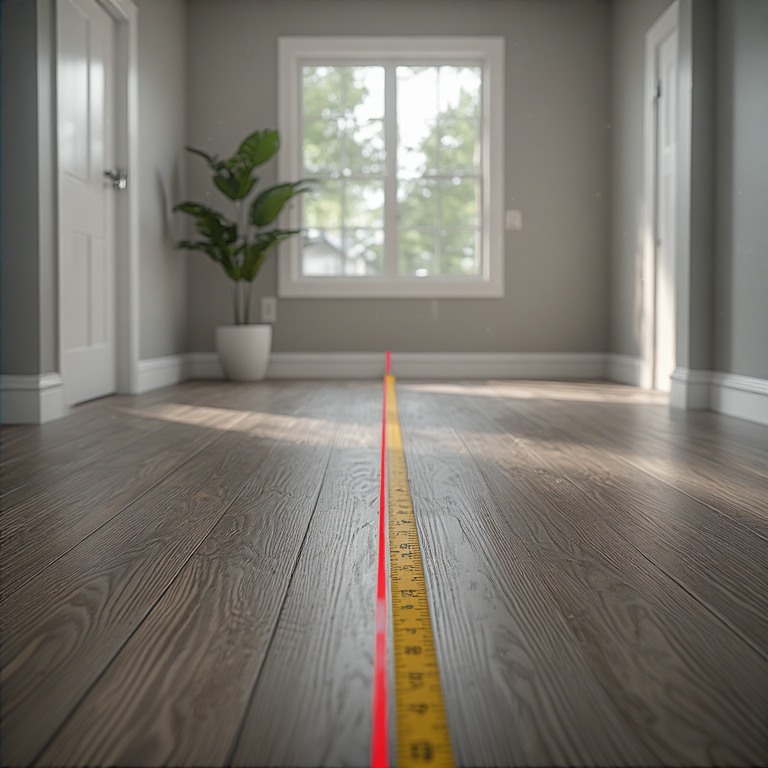
Floors and Beyond offers free on-site consultations for commercial projects across Fairfax, Arlington, Loudoun, and Prince William counties. Our experienced in-house team brings samples, takes measurements, and delivers all-inclusive estimates directly at your office, so you're comparing real numbers against a real space, not a showroom guess. Every consultation covers traffic patterns, subfloor condition, moisture risk, and zone-specific recommendations. The goal is a spec that's right for your office, not just one that's easy to sell.
Our installation crews have worked together for years and have completed commercial flooring projects in office buildings, retail spaces, medical offices, and co-working environments throughout the DC metro area. That continuity in crew means consistent quality on every job, not a rotating mix of subcontractors assembled for each project.
Transparent pricing with no last-minute surprises
Every estimate from Floors and Beyond includes labor, materials, subfloor prep, and moisture mitigation where required. No line items appear after the job starts, and no scope creep gets added without a conversation first. For commercial property managers overseeing multiple suites or tenants, that pricing predictability is operationally valuable. Floors and Beyond is fully licensed, bonded, and insured for commercial projects, and our crews are experienced working alongside other trades on active job sites.
Reach out to our team to schedule a site visit. We'll walk your space, assess the slab, and put together a no-surprise estimate, so you can make this decision with the full picture in front of you.
The bottom line: what is the best flooring for a commercial office space in Northern Virginia
Start with your slab conditions and your climate exposure, then match the flooring type to each zone's traffic and acoustic needs. When you're weighing what is the best flooring for a commercial office space in Northern Virginia, commercial LVT covers the most ground for most offices: durable, waterproof-core construction, low maintenance, and budget-flexible across a wide range of aesthetics. Carpet tile wins wherever noise control is the priority, primarily in open workspaces and conference rooms. Polished concrete is the right call when long-term durability and minimal upkeep are the goal, with the understanding that acoustic treatments need to compensate elsewhere in the space.
Evaluate cost over a 15–20 year horizon, not just the install day. A floor that fits your environment and traffic pattern from the start will consistently outperform a cheaper spec that needs remediation or early replacement. Contact the Floors and Beyond team, get samples in hand, and walk through an all-inclusive estimate before you commit. That conversation is free, and it's the clearest step you can take toward getting this decision right.